
In industrial automation, actuators are chosen less by popularity and more by how reliably they turn control commands into physical movement over thousands of cycles. Every production line depends on motion that starts the same way, reaches the same position, and holds steady under load. When an actuator cannot do that consistently, the problem shows up quickly as misfeeds, drift, uneven cycle times, or quality loss. Understanding which actuator types appear most often means understanding why certain motion solutions hold up better in specific operating conditions.
Across manufacturing and process environments, three actuator categories dominate because they solve different motion problems with predictable behavior. Linear motion actuators handle positioning tasks along a straight path, valve actuators manage flow and pressure by controlling valve position, and heavy-duty industrial actuators handle force-intensive or harsh-duty applications. The sections below explain where each is most commonly used, how it behaves in real operation, and what engineers evaluate before committing to it. For a broader overview of ETI’s actuator portfolio, refer to Actuator.
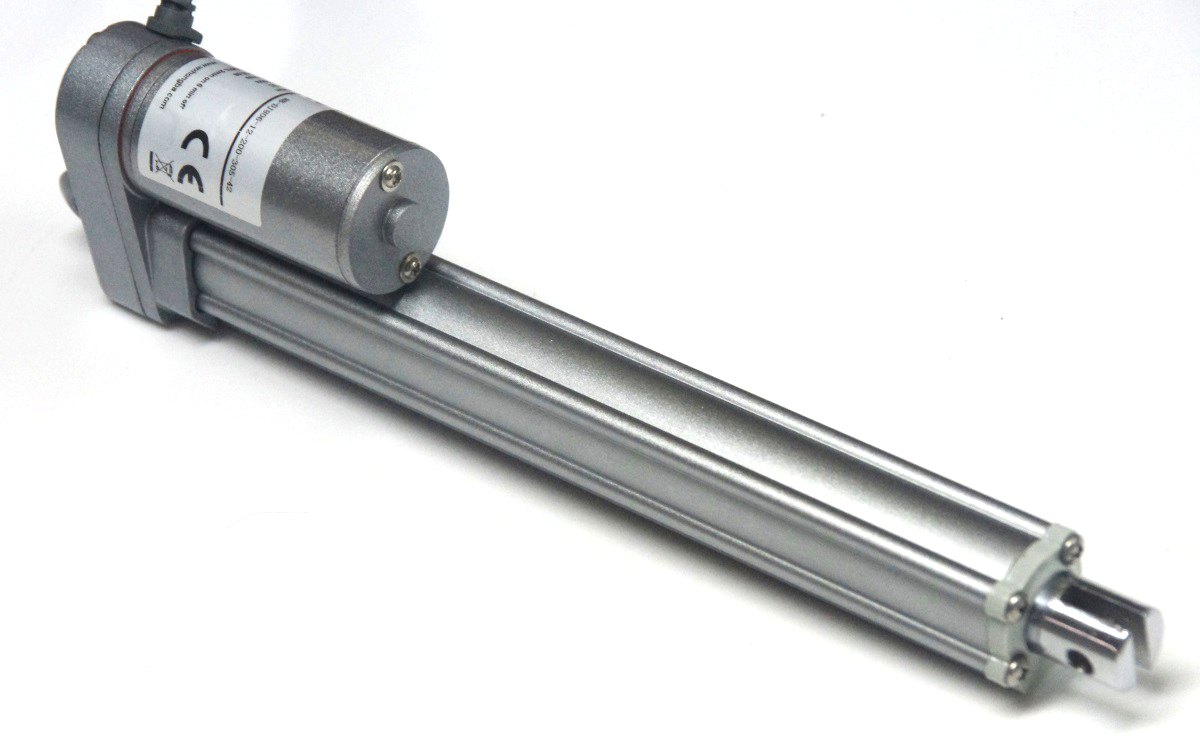
In automation systems, the most used actuator is the one that delivers stable motion without constant correction. Pneumatic actuators remain common for fast, repetitive actions such as clamping, ejecting, and diverting because they respond quickly and integrate easily where compressed air is already present. Electric actuators are widely used when the application requires controlled speed, accurate positioning, and repeatability that can be monitored directly through the control system. Hydraulic actuators appear less frequently, but they are essential when high force and steady holding under load are required.
Selection becomes clearer when engineers evaluate motion demands instead of device categories. The peak force required during the hardest part of the cycle, the speed needed to meet takt time, the tolerance at the stop position, and the surrounding environment all influence which actuator performs best. When these factors are matched correctly, the actuator operates within a comfortable range rather than being pushed to its limits, which is why it becomes the “most used” solution on that line.
A Linear Actuator is most commonly used when a machine must move to a defined position along a straight path and return to that position repeatedly. These actuators appear in indexing mechanisms, gates, stops, lifters, and adjustment axes where positional accuracy directly affects throughput and product handling. When a linear motion axis drifts even slightly, downstream issues such as jams or sensor errors quickly follow.
Long-term reliability depends on mechanical discipline as much as actuator selection. The load must be guided by rails or slides so the actuator is not carrying side forces, and the stroke length must include usable travel without forcing the mechanism at either end. Engineers also compare the expected duty cycle against peak production conditions to ensure the actuator can sustain the motion pattern throughout extended runs. ETI provides application-specific guidance for these use cases through its Linear Actuator solutions.
A Valve Actuator is most commonly used in automation systems where flow, pressure, or temperature control determines process stability. These actuators appear throughout water treatment, chemical dosing, HVAC systems, utilities, and process skids. In these environments, the actuator’s ability to position the valve accurately and hold that position under changing loads is critical to maintaining consistent output.
Valve actuator selection comes down to how the valve loads up in normal service, and how that load changes as conditions shift. Teams look at seating and breakaway needs first, then confirm there is enough torque margin through the working range so the valve still reaches position when the process pushes back. They also match the actuator’s travel speed and cycling rate to the way the line runs, since moving too fast can create pressure shock and moving too slowly can make control feel laggy. ETI’s Valve Actuator options are designed around that day-to-day behavior, so position changes stay repeatable over long operating periods.
An Industrial Actuator is usually the right fit when the station faces high force, rough handling, or harsh conditions that can quickly wear out lighter equipment. You see these in washdown areas, outdoor machinery, dusty conveying zones, and high vibration stations where mounts get shaken, and linkages take repeated impact. In those locations, keeping alignment stable and keeping contaminants out has as much influence on uptime as raw speed or accuracy.
A reliable installation keeps the mechanics simple and protected. The mount needs to stay stiff under load, the linkage needs to sweep through its travel without tightening at any point, and cables or hoses need routing that avoids rub points, sharp bends, and constant flexing at the same spot. During commissioning, teams normally record baseline extend and retract times under the working load and check repeatability at one or two key positions, so later changes are easy to spot. ETI designs its Industrial Actuator options with this kind of service reality in mind.
Commissioning is where actuator selection is validated. Engineers observe motion at low speed to confirm smooth starts, steady travel, and controlled stops, then repeat the same checks at operating speed to ensure behavior remains consistent. Approaching a key position from both directions helps identify alignment or compliance issues that only appear during reversals.
Holding a mid-position under normal load provides insight into leakage, back-driving, or control instability. Sensor signals are also checked while nearby equipment switches on and off to rule out electrical interference. These practical checks create a reference point for future maintenance and ensure the actuator continues to behave as expected throughout its service life.
No single actuator dominates all applications. Linear, valve, and industrial actuators are each widely used where their motion characteristics match the task.
A Linear Actuator provides repeatable straight-line motion with defined stop points, making it suitable for indexing and adjustment tasks.
A Valve Actuator allows precise control of flow and pressure, which directly affects process stability and output quality.
An Industrial Actuator typically wears early due to misalignment, side loading, or poor mounting that introduces unnecessary mechanical stress.
Engineers typically record cycle times, repeatability at key positions, hold performance under load, and sensor feedback values.