
On a real machine, control is less about computing power and more about consistency. The system needs to react the same way at 8 a.m. and at the end of a long shift, even when temperatures change, loads vary, and operators move quickly between commands. That repeatable behavior is what keeps commissioning stable and makes later service work predictable.
An Industrial Controller is the device that coordinates the behavior. It reads field signals, turns them into decisions using your control logic, and updates outputs in a controlled pattern so motion, timing, and safety conditions stay aligned with how the equipment is meant to run.
Most controllers work in a repeating cycle. They read inputs, run the program logic, then update outputs based on the result, and the cycle repeats fast enough that the machine responds smoothly. What makes this reliable is not the cycle speed alone, but the discipline of how values are handled, filtered, and checked before they affect motion.
In practice, we pay close attention to what the controller is actually reading. Digital inputs can bounce, analog inputs can drift, and a wiring reference can shift under load, which means the controller can react even when the mechanism did not move. Good control design includes simple protections such as debouncing, input filtering, stable referencing, and clear fault thresholds so the logic stays tied to real conditions.
The program is where raw signals become usable behavior. We use limits, ramps, and interlocks so outputs change in a controlled way instead of snapping from one state to another. That is how we avoid harsh starts, reduce overshoot near target points, and keep the machine from hunting when the system is close to a setpoint.
We also build decisions around what operators and mechanics can actually repeat. When the logic matches the process, the machine feels consistent, operators trust the response, and small adjustments are easier because the behavior has a clear cause.
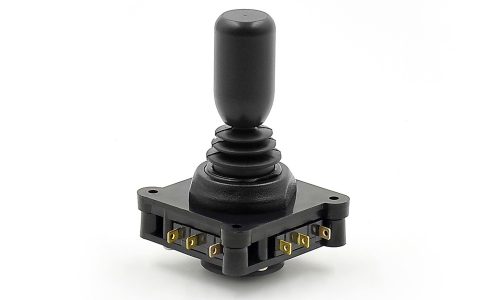
An Industrial Joystick is usually a proportional input, so the controller converts its signal into a speed or direction command, then applies rules before motion is allowed. We typically add neutral handling, deadband, and rate limits so that small noise does not create unintended creep and fast hand movements do not create abrupt changes in motion.
The important point is that the joystick signal is only a request. The controller enforces conditions such as enable states, travel limits, and safety interlocks, then shapes the final output so the machine responds smoothly and stays within the approved operating envelope. If you want a deeper integration view, Industrial Joystick Controller: Revolutionizing Control Systems is a useful internal guide.
A controller is also the first place we look when behavior changes. Good configurations make it easy to see what the system believed at the moment a fault occurred, which input changed, and what output was commanded. That clarity matters because it keeps troubleshooting focused and prevents teams from swapping parts without evidence.
We also plan for what happens after a replacement. When outputs are verified against known baselines and key inputs are checked for stability, you can confirm the system is back in range without retuning the whole machine.
During commissioning, we prove two things. First, the controller reads inputs the way the machine actually moves, and second, the machine responds to outputs in a stable, repeatable way under real load. We confirm scaling at known points, verify response around the working band, and record a small baseline that can be repeated later.
For operator control, we also confirm that an Industrial Joystick returns cleanly to neutral, holds steady without drift, and produces predictable command steps through the first part of travel where fine control matters most. When those checks are saved, service work becomes faster because technicians can compare today’s readings to known values and isolate the change without guessing.
ETI Systems works closely with engineers and integrators who design and support industrial control equipment that must perform reliably in real operating environments. Our product portfolio and application support are built on decades of experience with control components used in motion, automation, and operator interface systems, where consistent input behavior and predictable logic response are essential to stable machine operation.
We help teams bridge the gap between design intent and day-to-day operation by focusing on how controllers, input devices, and wiring behave once the machine is powered and in use. Through practical guidance, clear documentation, and commissioning practices that establish repeatable baselines, ETI Systems supports smoother startups and more confident service work. When changes or replacements are needed later, those baselines allow teams to confirm performance quickly and keep control behavior consistent as equipment and processes evolve.
It reads field inputs, runs control logic, and updates outputs so the machine behaves consistently under real operating conditions.
It uses ramps, limits, and interlocks so outputs change in a controlled way and the machine settles predictably.
Noise, bounce, drifting analog references, or shared returns can change the input value, so the controller responds to the signal it sees.
Scale the signal, apply deadband and rate limits, enforce interlocks, and confirm neutral stability so motion stays controlled.
Scaled checkpoints, a repeatable baseline under load, and neutral and low travel checks help service teams verify the system quickly.