
When we look at an electronic suspension system, we start by separating two jobs that often get blended together. One job is changing damping, which is how the damper resists motion as the wheel moves. The other job is changing ride height or load leveling, which is how the vehicle maintains its stance as conditions change. Both jobs rely on actuated hardware, but the most common actuator types differ because the force levels, response time, and packaging constraints are not the same.
In real design work, the key question is not “what can move,” but “what must be controlled predictably.” We usually care about how quickly the system can respond, how stable it stays when the command is held, and how repeatable it remains after temperature swings, vibration, and long duty cycles. Once you frame the problem that way, the common actuator choices in electronic suspension become easier to understand.
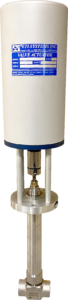
Many electronic and semi-active suspension systems adjust damping by changing fluid flow through internal passages. The most common way to do that in production hardware is a solenoid valve that moves a small spool, needle, or poppet to open and close flow paths. The motion is small, but the effect on the damping force is large because the valve sits in the damper’s hydraulic circuit.
From an engineering view, what matters is response and repeatability. A solenoid valve can move quickly and can be controlled with simple drive electronics, which helps the controller make frequent adjustments as road inputs change. The practical checks are also familiar, because you can validate current draw, response consistency, and whether the damper returns to a known state when commanded to a baseline.
Magnetorheological dampers achieve damping change in a different way. Instead of moving a valve element, the system uses a coil to create a magnetic field that changes the fluid’s apparent viscosity. That field control can be fast, and it tends to be smooth when the system is calibrated well, because the command changes the damping level without relying on contact surfaces moving inside the damper.
In practice, we treat the coil and the control electronics as a matched pair. We pay attention to thermal behavior because coil resistance and temperature rise influence the relationship between command and damping outcome. Commissioning tends to focus on verifying that commanded changes produce consistent damping shifts under real operating conditions, not only on a bench.
Some suspension architectures place the controllable element outside the damper, such as in valve blocks or hydraulic modules. In those cases, small electric motors, including stepper motors or compact DC motors, are used to position a valve element precisely. This approach can be useful when you need finer positional control than a simple on/off valve, or when the module combines multiple functions.
The benefit is controlled positioning with a clear, measurable relationship between command and valve state. The tradeoff is that you must manage mechanical tolerance, wear surfaces, and sealing details so the valve position remains stable. In service, teams often find that consistent mounting and contamination control matter as much as motor selection.
When the system includes air springs or air bladders, the actuator’s job shifts toward pressurizing, exhausting, and routing air. The compressor provides the energy, and a valve block directs air to the correct corner or circuit. These systems also rely on ride‑height sensing and a control strategy that prevents constant correction, especially when the vehicle is parked or carrying variable loads.
Here, the engineering focus is on leakage management, duty cycle, and recovery behavior. A compressor that is sized for occasional correction may struggle if the system has slow leaks or aggressive control logic. We typically treat the valve block, seals, and line routing as part of the actuator system, because those details decide whether the height command stays stable or turns into frequent cycling.
True active suspension goes beyond changing damping. It generates an additional force to push the wheel or body in a controlled direction. Many concepts use electrohydraulic actuation, where a pump supplies pressure and a servo valve meters flow to a hydraulic cylinder. Others explore electromechanical linear actuators, often built around a motor and ball screw, that can apply force directly.
These are higher‑power solutions, so the design conversation shifts to energy, heat, and fault strategy. Engineers think about what happens under sustained demand, how the system behaves when power is limited, and how the controller degrades safely. Verification also becomes more structured because you are validating force output, response, and stability across a wider operating envelope.
When we help teams select suspension actuation, we begin with the control goal and then work backward to the hardware. If the goal is fast-damping trim, internal solenoid or field-based damping control tends to fit well. If the goal includes leveling or ride height, compressors and valve blocks become central, and duty cycle and leakage control drive long-term results.
We also plan how the system will be verified after it is built. A good actuator choice is one that can be checked with repeatable readings and a short baseline procedure. That baseline is what keeps troubleshooting grounded later, because it lets a technician prove whether the behavior changed due to the actuator, the wiring, the mounting, or the control strategy.
We work with engineers who need motion hardware that behaves consistently once it is installed, not only when it is evaluated on paper. Our approach starts with the real operating profile, including load, duty cycle, temperature exposure, and how the system will be commissioned and serviced. When those details are addressed early, teams avoid late surprises and can bring systems online with fewer tuning loops and fewer open questions.
We also support projects with practical guidance that helps teams verify performance in the field. That includes helping define what to record during startup, so the system has a meaningful baseline for future service. If you want a broader overview of actuator options and selection thinking, our next read is Actuators. If you are mapping how motion and feedback fit into a larger control stack, a useful guide is Industrial Automation Systems: Unleashing the Power of Industrial Automation Systems.
They use an electrical coil to change a magnetic field, which changes how the fluid resists flow and shifts the damping level in a smooth, controllable way.
Solenoid valve actuation inside the damper is widely used because it can change fluid flow quickly and repeatably with compact electronics.
Air suspension commonly uses an electric compressor for pressure and a valve block to route air, supported by height sensing and control logic that limits excessive cycling.
Semi-active systems adjust damping characteristics, while fully active systems add force through electrohydraulic or electromechanical actuators to control body and wheel movement.
Teams usually confirm response consistency, command‑to‑output behavior under real conditions, and stability when the command is held, then record those results as a baseline for service.