
An industrial Actuator converts a control command into repeatable motion, which is why it sits at the center of modern automation. When equipment needs a valve to move to a known position, a gate to close with consistent force, or a mechanism to travel the same stroke every cycle, the motion device has to behave predictably under load. A Linear Actuator is often selected for these jobs because it delivers controlled straight-line travel that can be verified with simple checks during startup.
In practice, selection is less about a catalog spec and more about how the motion device will live on the machine. Duty cycle, load direction, mounting stiffness, temperature, washdown exposure, and feedback expectations all shape whether the design stays stable over time. When teams connect those realities to commissioning steps and a service plan, motion stays consistent, and troubleshooting stays focused.
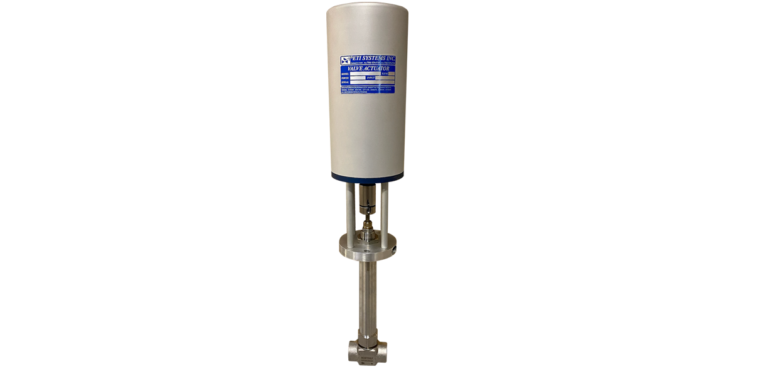
A linear motion device is used when the machine needs consistent stroke travel and controlled force along a straight axis. That is common in valve positioning, dampers, diverters, clamps, and indexing mechanisms, where the motion must start, move, stop, and hold without hunting. In many lines, the motion device is also part of the safety and quality story because repeatable positioning protects tooling and reduces scrap.
The most useful way to think about a motion device is as part of the loop, not a standalone component. The controller expects the mechanism to respond the same way every cycle, and operators expect the machine to feel consistent across shifts. When mounting is rigid, stroke is sized to the usable travel, and feedback is scaled correctly, the system behaves predictably and downtime drops.
A Linear Actuator is a strong choice when you need straight travel with controlled speed and predictable end positioning. You will see it used for proportional valve positioning, louvers and dampers, material gates, small presses, and automation tasks where a pneumatic cylinder is being replaced to gain better control or easier integration.
The fit improves when the stroke and force are chosen around the real working window, not only the maximum travel. Leave a margin at the ends so the mechanism does not ride hard against physical stops, and confirm that brackets and guides do not introduce side loads. When the geometry is stable, the device tends to hold position better, and repeatability becomes easier to prove during commissioning.
The main difference is the motion output and how it is controlled. A straight-line motion device typically simplifies stroke mapping and makes it easier to relate a command to a physical position. Rotary devices, pneumatic cylinders, and hydraulic systems can be excellent choices in the right context, but they often require different tradeoffs around plumbing, compressibility, stiffness, or mechanical conversion of motion.
If you want a practical comparison that breaks down these tradeoffs, read How Do Linear Actuators Differ from Other Types of Actuators? to learn more. The key selection point is matching the motion style to the job so the control loop stays stable without excessive tuning or compensation.
Sizing begins with what the mechanism must move and how often it must move it. Start with the required thrust along the axis, include friction and any off-axis forces your guides may introduce, and confirm whether the load is pushing, pulling, or both. Then match the duty cycle to the expected cycle time and ambient conditions so thermal limits are respected.
Signal expectations matter just as much. If the controller will treat the motion as position control, define what resolution and repeatability are needed in the working band. If the motion is more like open-loop positioning, define acceptable error at the endpoints and what the line can tolerate. This keeps the system simple, avoids over-specifying, and makes acceptance checks easier to run and document.
Most field issues trace back to alignment, mounting stiffness, or wiring practices. Keep the device aligned to the axis of travel, avoid bracket flex that changes the effective stroke under load, and ensure the mechanism is guided so the motion device is not forced to handle side load. Wiring should be routed away from high-current lines, grounded consistently, and verified under real machine conditions, not only on a bench.
During commissioning, run a short acceptance routine and save the results with the part number and install notes. Confirm the usable endpoints, verify stroke time under load, and record a baseline response so you can compare later after maintenance. When the baseline exists, service becomes a controlled comparison, and teams can separate mechanical shift from control changes much faster.
For valves and dampers, the goal is repeatable seating and stable intermediate positions. Engineers typically verify that the device can move smoothly through the working range, hold position without drift, and return to the same endpoint from both approach directions. A short baseline record after startup makes later tuning and troubleshooting much faster.
Material handling mechanisms benefit when motion is consistent across load changes. Teams often verify that the mechanism reaches position within the allowed time window, does not chatter at the endpoint, and remains stable during vibration. A stable mounting approach usually matters more than a small gain change in the program.
For clamps and indexing, repeatability protects tooling and reduces scrap. Engineers typically confirm that the mechanism reaches the same position under real process forces and that the cycle remains consistent over a full shift. Documenting these checks helps maintenance restore performance quickly after service.
ETI Systems supports industrial motion and control needs with a portfolio that includes position and feedback components designed for production environments. Teams benefit when the selection process stays grounded in real machine constraints, with documentation that supports commissioning, verification, and long-term service.
For a deeper look at selection, sizing, and verification steps, read Linear Actuator to learn more. When engineering and maintenance share the same baseline checks and install notes, system stability improves, and the line becomes easier to support.
An industrial motion device is used to move a mechanism to a commanded position with repeatable speed, force, and endpoint behavior, often as part of a closed-loop control system.
They are commonly used for valve positioning, dampers, material gates, clamps, and automation tasks where straight-line travel and repeatable endpoints are required.
Confirm endpoints and stroke time under load, then record a baseline response that can be reused after maintenance to validate performance.
Misalignment, bracket flex, side load, and poor wiring routes are common causes. Correcting mechanical alignment and signal routing often stabilizes performance quickly.
Design mounting so the device can be swapped without re-machining, standardize wiring and connectors, and keep a simple acceptance check so maintenance can verify the system before returning to production.